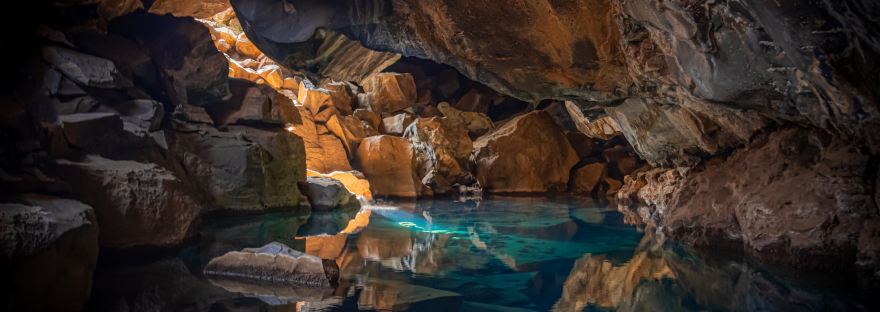
Seven years ago, I enrolled in my first creative writing course — Coursera’s Writing for Young Readers: Opening the Treasure Chest. It ticked all the boxes: it was for beginners, online, and free. I thought I’d write for children. I thought it’d be easy. Little did I know I had entered Aladdin’s cave.
For my first assignment Life Event from a Viewpoint, I submitted 908 words instead of the required 500 and was failed by every one of my peer-assessors. Indignant, I fumed. I’d poured my soul onto the page, with tears and trepidation, and I had to count my words? I’m not doing that, I thought.
Yet someone had liked my writing. A golden glint amid the stones. I was allured; I had to step deeper into the cave. So, I reopened my hard-covered notebook and carried on recording the words of the sorcerer instructors, mapping out this new, enchanted path to the world of storytelling and stumbling over craft elements I didn’t know the words for. And then Apirana Taylor — in a black leather jacket, sitting in the dappled sunlight of his garden — instead of Open Sesame, said, “Writing is about decisions.” By the end of a single paragraph, he explained, we make at least thirty decisions and by the end of the page — probably one thousand. “Every word you use involves a decision, doesn’t it? You are in a position of power over all those decisions.”
I hit rewind and wrote out the words, each one a gleaming gold coin in the treasure chest I had just unlocked. This was profound. The decisions I’ve made so far had opened some paths and obscured others; some I was forced to make. The outcome is irreversible, like time, like life.
Not so in writing.
Let’s say I’d start a story with Once upon a time. A dagger would flash — cliché! The Sultan was a sad man, I’d write instead, his heart was colder than gold. Would that line hook the reader? What would Scheherazade say? Her words would be oriental, sensual like herself — luscious hair, enigmatic eyes… Enigmatic. How does that word advance the plot? What’s the point of view, omniscient? Just write, I’d think, it’s a first draft; tell the story as it is. And did I just say tell? Show, of course, I meant show!
Then comes the editing. Decisions changing time. Like Sultan, killing the girls before Scheherazade, I’d frown and scrutinize each paragraph, demanding to know why it is there, what it has to say, why should I spare its life? Then I’d sentence it: to be rewritten or die by the swift guillotine of the Delete button. But what if I kill Scheherazade herself?
The path to the story’s gold doesn’t end here. Shadows would grow from niches and nooks, puddles of underground water, critiques and doubts. Defend us, my characters would scream, Don’t lose your voice, I’d shout at myself, looking at the proofreader’s red squiggles, the editor’s feedback, and would feel the blue flame of magic flicker and darken, threatening to bang the lid of the treasure chest closed.
Writing is about decisions. Seven years later, and thousands of written and deleted words wiser, I know that the path to the treasure clears itself out through the constant battle about what decisions to keep. For me, the best are the ones that let me tell the story blue and magical like the first time I stepped into the Aladdin’s cave.
 Rostislava Pankova-Karadjova